Padel Racket Shapes Explained: Round vs Teardrop vs Diamond
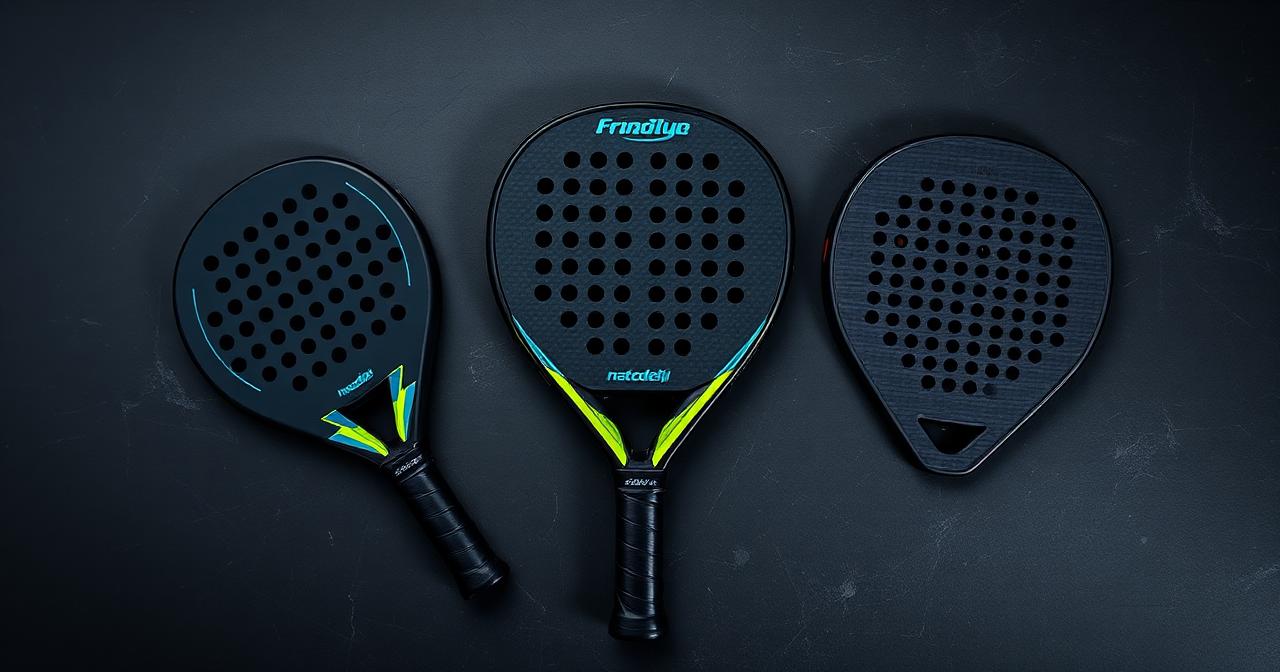
Walk into any padel store — including ours — and you’ll see rackets in three distinct shapes: round, teardrop, and diamond. These shapes aren’t cosmetic. They’re the single biggest factor (alongside weight and balance) in how a racket feels and what it’s good at.
Pick the wrong shape and you’ll fight your racket every match. Pick the right one and you’ll feel like you’ve levelled up overnight. Here’s how to choose.
How shape changes the racket
Padel racket shape determines two things: where the sweet spot sits and where the weight is distributed. That in turn defines whether the racket is built for control, power, or a balance of both.
Round shape — control, comfort, forgiveness
Sweet spot: dead centre of the face, large and easy to find.
Balance: low (weight near the handle). The racket feels light and quick.
Who it suits: beginners, juniors, control players, and anyone with elbow or shoulder issues. Also a great second racket for advanced defensive players.
Tradeoff: less inherent power on the smash — you have to generate the speed yourself rather than relying on the frame.
Signature models: Bullpadel Flow, Babolat Counter Vertuo, Nox ML10 Pro Cup.
Teardrop shape — the hybrid all-rounder
Sweet spot: slightly higher than centre, medium size.
Balance: medium. Some swing weight up top for punch, still manageable.
Who it suits: intermediate-to-advanced players who want power on offence without giving up control on defence. The most popular shape on the World Padel Tour for hybrid players.
Tradeoff: jack of all trades — won’t quite match a diamond on raw smash power, won’t quite match a round on pure forgiveness. But if you only own one racket, this is the safe choice.
Signature models: Bullpadel Hack, Babolat Technical Viper, Nox AT10 Genius.
Diamond shape — maximum smash power
Sweet spot: high on the racket head, small and demanding.
Balance: high (weight up top). Feels head-heavy on the swing.
Who it suits: advanced attackers, smash specialists, players who win points by finishing rallies aggressively. The shape of choice for pros like Ale Galán, Juan Lebrón and Agustín Tapia.
Tradeoff: punishing on off-centre hits, more fatiguing to swing, harder on the elbow over long sessions. If you’re not yet hitting the centre of the racket consistently, a diamond will make your padel worse, not better.
Signature models: Bullpadel Vertex, Adidas Metalbone, Nox AT10 18K.
Quick decision guide
| Your situation | Buy this shape |
|---|---|
| First racket / under 3 months playing | Round |
| Improver, want one racket for everything | Teardrop |
| Defensive position player (left side) | Round or low-balance Teardrop |
| Attacking position player (right side) | Teardrop or Diamond |
| Smash specialist, advanced | Diamond |
| History of tennis elbow / shoulder issues | Round (always) |
The shape myth: “diamond = better”
The biggest mistake new players make is buying a pro-tour diamond because their favourite player uses one. Pros use diamonds because they hit the centre of the racket on 95% of swings. If you’re hitting centre on 60% of swings (totally normal for an improver), a diamond will give you less power, not more, because off-centre hits on a diamond shape die instantly. A teardrop or round will give you better results until your contact consistency is professional-grade.
Still not sure?
Honest answer: ask. Message us on WhatsApp with your level, position (right or left side), and play style, and we’ll match you to the right shape. All padel rackets at SportSabi are 100% authentic, ship free in the UAE on orders over AED 300, and come with our 14-day return policy.